

A retort pouch is a flexible packaging solution designed for the sterilization and preservation of ready-to-eat foods and perishable products. It functions by combining a multi-layer laminate structure capable of withstanding high-temperature processing with the convenience of lightweight, space-saving packaging. This technology enables extended shelf life without the need for refrigeration, making it ideal for long-term storage and distribution in various industries.
Construction and Materials of Flexible Packaging
The core of a retort pouch lies in its multi-layer laminate, which typically consists of polyester (PET), aluminum foil, and polypropylene (PP). Each layer serves a specific function:
- Polyester (PET): Provides mechanical strength and clarity;
- Aluminum Foil: Acts as a barrier against light, oxygen, and moisture to maintain product integrity;
- Polypropylene (PP): Offers heat sealability and compatibility with high-temperature sterilization processes.
This combination ensures the pouch can endure retort sterilization, which involves steam or hot water treatment at temperatures typically ranging from 115°C to 130°C.
How Thermal Sterilization Works in Retort Packaging
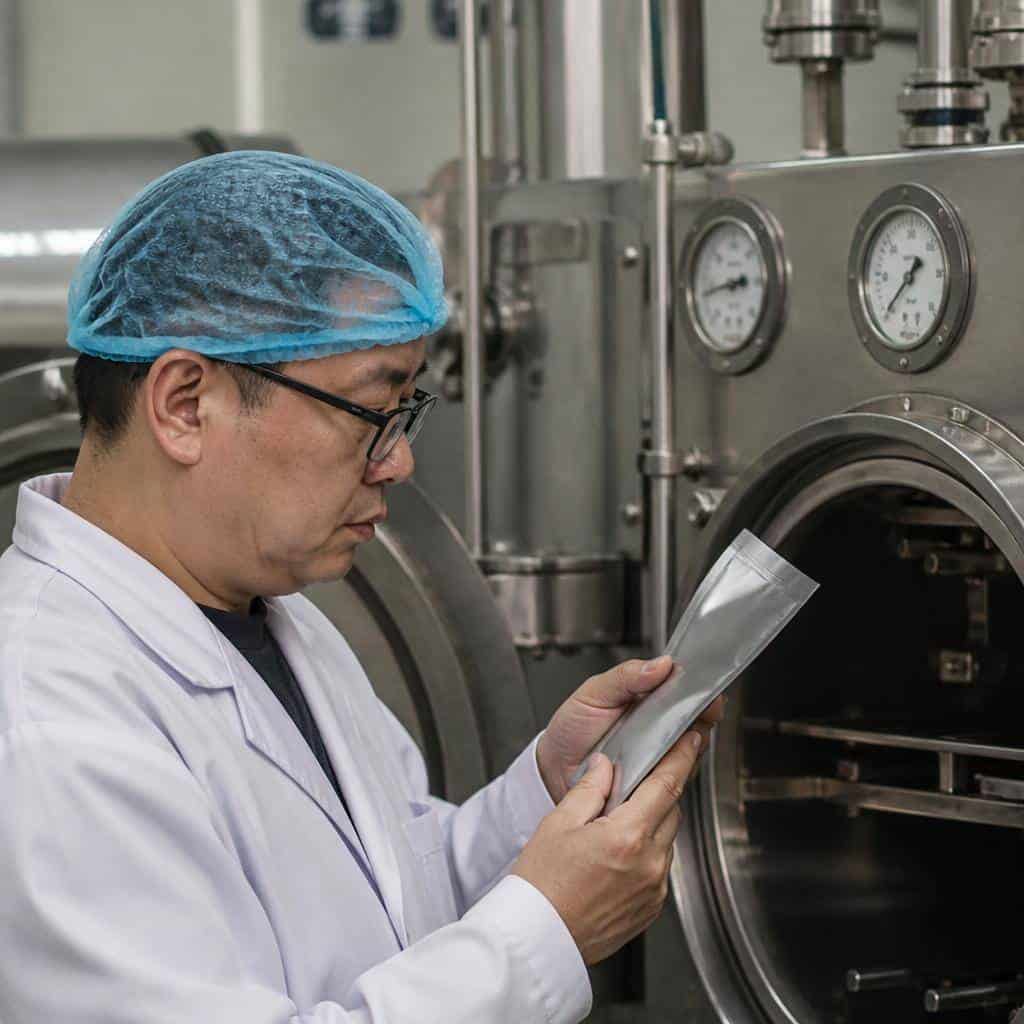
Thermal sterilization is a key process that enables retort pouches to maintain safety and quality for extended periods. The procedure involves placing the filled pouches into retort chambers where they are heated under controlled pressure and temperature. This treatment eliminates microbial contaminants, including spores, while preserving the food’s texture, flavor, and nutritional value better than traditional canning.
Factors Affecting Retort Processing
- Temperature Range: Precise control between 115°C and 130°C is essential;
- Time Duration: Dependent on food type and pouch thickness;
- Pressure Control: Maintains pouch integrity and prevents deformation;
- Heating Medium: Typically steam or hot water to ensure uniform heat distribution.
Advantages Over Conventional Packaging
The adoption of retort pouches offers distinct advantages compared to metal cans and glass jars, especially in industrial food processing and distribution:
- Reduced Weight and Volume: Easier and more cost-effective transportation;
- Enhanced Product Shelf Life: Extended without refrigeration;
- Improved Heat Transfer: Faster sterilization cycles owing to pouch thinness;
- Convenient for Consumers: Easy to open, resealable designs are feasible;
- Lower Environmental Impact: Less material usage and better disposal options.
Applications and Industry Use Cases
Retort pouches are widely utilized across the food industry for packaging ready meals, soups, sauces, and seafood products. Their robustness and ability to retain product quality post-sterilization have made them a preferred choice in military, outdoor, and emergency food supplies. Additionally, the packaging supports a variety of food consistencies including solids, semi-solids, and liquids.
In pharmaceutical and pet food sectors, retort pouches provide contamination resistance and improved storage convenience, aligning with strict hygiene and safety standards. This versatile packaging format adapts well to automated filling lines, supporting high-volume industrial production.
Key Selection Criteria for Retort Pouch Adoption
When selecting a retort pouch for industrial use, consideration of the following factors is critical:
- Material Compatibility: Suitability for the product’s chemical and physical properties;
- Barrier Requirements: Adequate protection against moisture, oxygen, and light;
- Sterilization Process: Ability to withstand specific thermal cycles without failure;
- Sealing Integrity: Ensuring airtight seals to prevent contamination;
- Regulatory Compliance: Adherence to food safety and packaging standards.
Retort Pouch in Modern Flexible Packaging Solutions
A modern flexible packaging production line often integrates retort pouches due to their efficiency and proven functionality. The pouch’s design facilitates optimized packing density and reduces overall logistics costs. Furthermore, innovations in barrier films and sealing technology enhance performance, expanding application scopes.
It is also important to note the availability of a variety of pouch types tailored for specific use cases, such as stand-up pouches, flat pouches, and spouted versions. These variations accommodate diverse product requirements and consumer preferences.
For detailed product selections and specifications related to flexible retort packaging, exploring specialized manufacturers and suppliers ensures alignment with operational needs—such as those providing tailored retort pouch solutions for industrial-scale food processing.
The inclusion of a retort pouch in packaging strategies reflects an advanced approach to combining product safety, convenience, and cost management within the food supply chain.